How Japan Built the World’s Most Earthquake-Resilient Buildings
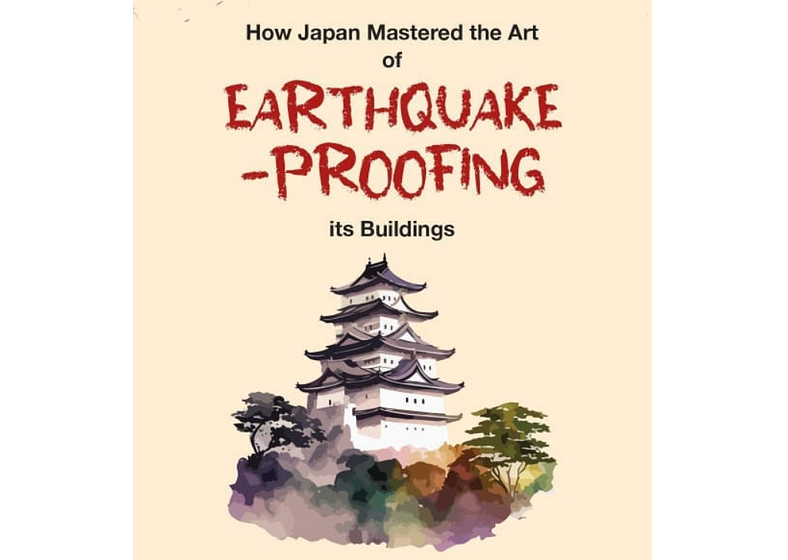
Japan’s expertise in earthquake-resistant architecture blends ancient wisdom with cutting-edge technology. Living in one of the world’s most seismically active regions, the Japanese adapted their buildings to withstand frequent, powerful earthquakes. This journey reflects centuries of experience and innovation, from wooden pagodas to skyscrapers.
Why Earthquake-Resilient Design is Critical
Located along the Pacific Ring of Fire, Japan faces thousands of tremors every year. Major earthquakes, like the Great Kanto Earthquake (1923) and the Tohoku Earthquake (2011), cause widespread destruction. To protect lives and property, earthquake-resistant architecture became a national priority.

“Move with the Earth”: The Philosophy Behind Japanese Architecture
Japanese buildings embrace movement rather than resisting it. The saying, “shiku wa tate, tate wa shiku” (the ground is the foundation, the foundation is the ground), emphasizes harmony between structures and the earth. This concept has guided architecture for centuries.
Ancient Techniques: Earthquake-Resistant Pagodas

Japanese pagodas, centuries-old wooden towers, are some of the earliest earthquake-resistant structures. Their resilience lies in the following:
- Nail-free construction: Wooden joints interlock to distribute seismic forces.
- Shinbashira (central pillar): A tree trunk runs through the pagoda, swaying during earthquakes to absorb seismic energy.
- Independent floors: Each level moves separately, reducing collapse risks.
The Horyu-ji Temple’s five-story pagoda (7th century) is a prime example. Despite enduring numerous earthquakes — including the 1995 Kobe Earthquake — the ancient structure remains intact.
Evolution: From Pagodas to Skyscrapers
As urbanization demanded taller buildings, engineers developed modern earthquake-proofing methods. Traditional ideas like the shinbashira evolved into technologies suited for high-rises in cities like Tokyo and Yokohama.

Key Earthquake-Proof Technologies in Modern Japan
- Dampers and Spring Systems

- Act like shock absorbers, allowing buildings to sway during tremors.
- Placed between floors or within structures to minimize seismic force.
2. Protective Mesh Structures

- Reinforces walls and columns to prevent buckling.
- Redistributes stress if one section fails, preventing collapse.
3. Base Isolation Systems

- Uses rubber bearings or flexible materials between the foundation and structure.
- Allows the building to move independently of the ground, reducing impact.
Modern Architectural Marvels: Earthquake-Resistant Skyscrapers
Tokyo Skytree (634 meters)
- Completed in 2012, this tower features a central column inspired by shinbashira, a flexible steel frame, and base isolation to absorb seismic energy.
Yokohama Landmark Tower
- Uses a combination of dampers, shock absorbers, and steel skeletons. The design allows it to sway independently, reducing earthquake impact on occupants and the structure.
Conclusion: A Blueprint for Resilient Architecture
Japan’s success in earthquake-resistant architecture reflects both tradition and innovation. From pagodas that have survived centuries to modern towers using advanced seismic technology, Japan continues to lead the way.
As seismic risks increase worldwide, Japan’s lessons offer valuable insights into designing structures that are both safe and durable. By blending ancient techniques with modern solutions, the country proves it’s possible to live harmoniously with nature — without compromising safety or aesthetics.


Comments