From Titan to Titanic: How Apple Blew $10 Billion Chasing Tesla’s Dream
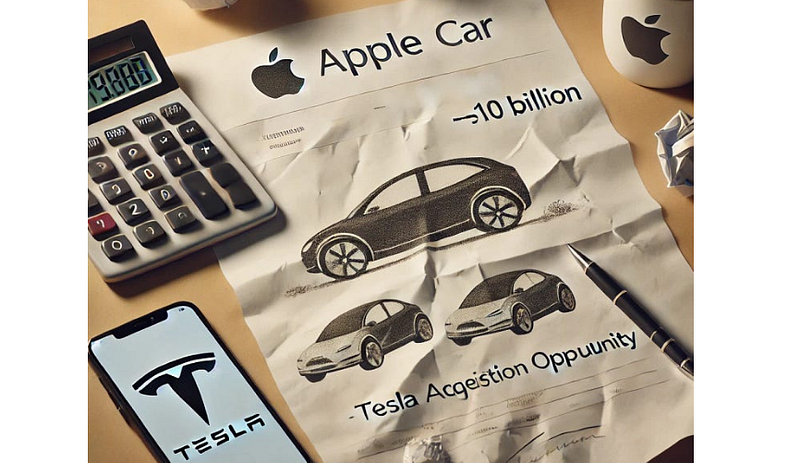
Apple is known for turning ambitious ideas into world-changing products, from the iPhone to the Mac. However, even the most successful companies sometimes miscalculate, and Apple’s $10 billion plunge into the automotive industry, codenamed Project Titan, is a stark reminder of that. This blog explores how Apple, the tech giant with nearly limitless resources, ended up burning billions on a dream that never materialized while missing the opportunity to acquire Tesla—a move that might have changed the trajectory of both companies.
The Birth of Project Titan
In 2014, Apple embarked on Project Titan, a secretive endeavor to create its own electric and possibly autonomous vehicle. The initiative was born in an environment ripe with excitement and speculation about the future of self-driving cars. Google’s early testing of autonomous vehicles in California had set Silicon Valley abuzz with the potential for a new era in transportation.
Apple, not wanting to be left behind in what seemed to be the next big tech revolution, jumped into the fray. They began assembling a dream team of engineers and experts, poaching talent from the automotive and tech industries. Among the high-profile hires were Johann Jungwirth, formerly of Mercedes-Benz; Jamie Carlson, a senior engineer from Tesla; Jonathan Cohen, Nvidia’s former director of CUDA Libraries; and Ronan O Braonain, a software engineer from BMW.
FOMO and the Fear of Missing Out

Apple’s entry into the automotive race was as much about innovation as it was about staying competitive in the eyes of its engineers and the broader tech community. As the self-driving car race heated up, there was a palpable fear within Apple of missing out on the next big thing. Tim Cook, Apple’s CEO, reportedly gave the green light to Project Titan partly to keep top engineers from jumping ship to Tesla, a company that was rapidly becoming a key player in the electric vehicle space.
At the time, Apple was generating nearly $200 billion in annual revenue, and Cook saw the $2 trillion transportation industry as a tantalizing new frontier. The goal was clear: Apple wanted a piece of the action and was willing to invest heavily to get it.
Tesla: The One That Got Away
As Project Titan gained momentum, Apple faced a critical decision: Should they build their car from scratch or acquire an existing company with the expertise and infrastructure already in place? According to several reports, Apple did explore the possibility of buying Tesla. Elon Musk, Tesla’s CEO, confirmed in an interview that he once had discussions with Apple about a potential acquisition.
However, Apple ultimately decided against buying Tesla. It wasn’t clear at the time why the talks fell through, but hindsight suggests that Apple’s leadership believed they could build a better car on their own. The decision would prove to be a costly one.
Leadership Turbulence and Strategic Missteps
From the outset, Project Titan was plagued by internal disagreements and shifting priorities. Steve Zadesky, who initially led the project, envisioned creating an electric vehicle that could rival Tesla. However, Jony Ive, Apple’s chief design officer, favored a focus on self-driving capabilities, reflecting the broader industry’s fascination with autonomous vehicles.
These differing visions created a lack of clarity and direction, which only worsened as leadership changes became frequent. Zadesky eventually left the project, and Bob Mansfield, a longtime Apple executive, was brought in to redirect efforts from building a car to developing self-driving car software. This pivot, however, only added to the confusion and disarray within the team.
Doug Field, a former Tesla executive, was later brought on board and made significant cuts to the workforce, focusing the team’s efforts on self-driving technology. But his successor, Kevin Lynch, would once again revert to the original goal of building an electric vehicle, further illustrating the project’s lack of consistent vision.
A $10 Billion Misadventure

By the time Project Titan was quietly shelved, Apple had reportedly spent an estimated $10 billion on the effort. The project had gone through multiple leaders, and the team’s size had fluctuated dramatically, but the goal remained elusive. The complexities of developing autonomous driving software, coupled with leadership turmoil and strategic indecision, proved too challenging even for a company as resource-rich as Apple.
Instead of leading a new era of transportation, Project Titan ended up as a costly misstep. In the aftermath, Apple shifted its focus to artificial intelligence, reassigning many team members to work on other initiatives.
The Road Not Taken: What Could Have Been
It’s hard not to wonder what might have happened if Apple had decided to acquire Tesla instead of going it alone. Tesla, under Elon Musk’s leadership, has become the world’s most valuable automaker, revolutionizing the electric vehicle market and setting the standard for autonomous driving technology.
Had Apple purchased Tesla, they might have gained not only a ready-made vehicle platform but also the visionary leadership of Musk, whose bold approach to innovation has made Tesla a dominant force in the automotive industry. Instead, Apple’s decision to build rather than buy led to one of the most expensive failures in its history.
Lessons Learned
The story of Project Titan is a reminder that even the most successful companies can stumble when venturing into unfamiliar territory. Apple’s experience highlights the importance of having a clear vision, consistent leadership, and an understanding of when to build versus when to buy.
While the $10 billion lost on Project Titan is a drop in the bucket for a company as wealthy as Apple, the missed opportunity to acquire Tesla — and the chance to shape the future of transportation — might be a loss that stings far longer.
Conclusion
Apple’s attempt to revolutionize the car industry ended up as a cautionary tale of ambition, miscalculation, and missed opportunities. The company’s $10 billion investment in Project Titan serves as a stark reminder that even the most well-funded and innovative companies are not immune to failure. Yet, in the world of technology, where the next big idea is always around the corner, Apple’s misadventure might also offer valuable lessons for the future.


Comments