How Did Sneakers Evolve from Simple Footwear to a Global Cultural Phenomenon?
 S
S
Sneakers are everywhere today, from athletes on the court to celebrities on the red carpet. But how did these rubber-soled shoes transform from functional footwear into a global fashion and cultural icon? Their story spans two centuries, driven by innovation, cultural trends, and smart marketing.
The Early Days: Sand Shoes to Plimsolls
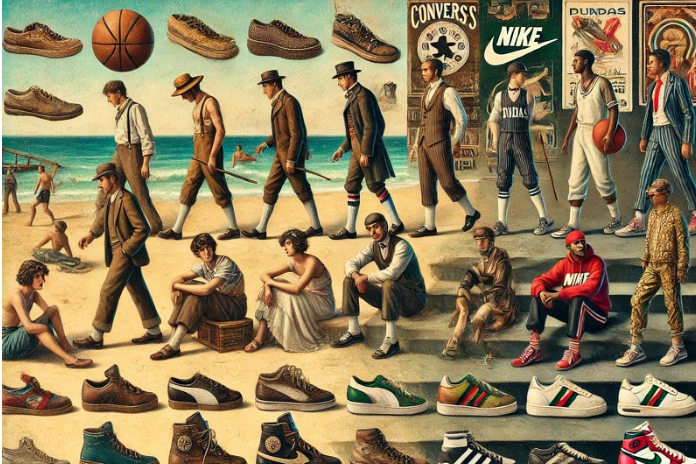
In the early 19th century, John Dunlop’s Liverpool Rubber Company invented the first rubber-soled “sand shoes” for beachgoers. These shoes, made from rubber and canvas, became popular with Victorian middle-class families who needed practical footwear for seaside outings.
By the late 1800s, sand shoes evolved into plimsolls — lightweight gym shoes with rubber soles and canvas uppers. Their affordability and versatility made them everyday streetwear. The name “plimsoll” came from their rubber edge, which resembled the plimsoll line on a ship’s hull, marking the point where water would seep in.

In 1929, G.T. Law launched the Green Flash plimsolls, gaining traction in tennis, especially on grass courts. Fred Perry, a three-time Wimbledon champion, popularized them during his matches.
The U.S. Revolution: Keds and Converse
In 1916, the U.S. Rubber Company introduced Keds, one of the first mass-produced sneakers. Keds got their name from how their rubber soles let wearers “sneak” around silently, marking the start of sneakers as casual, everyday wear.
A year later, Converse launched the All-Star basketball shoe. It became an icon when Chuck Taylor endorsed it in the 1920s, leading to the renaming of the shoe as the Chuck Taylor All-Star.
1936 Berlin Olympics: Global Spotlight on Sneakers

The 1936 Berlin Olympics was a pivotal moment for sneakers. The American basketball team wore Converse sneakers, giving the brand worldwide attention.
But the real spotlight belonged to Jesse Owens, who won four gold medals wearing shoes made by Rudolf and Adi Dassler, German brothers who later founded Adidas and Puma. Owens’ victory boosted the brothers’ reputation and laid the foundation for their future success.
Adidas vs. Puma: Rivalry Fuels Innovation
In the 1940s, tensions between the Dassler brothers led them to split. Adi Dassler launched Adidas, focusing on specialized athletic shoes and pioneering the iconic three-stripe logo. Rudolf Dassler founded Puma, emphasizing stylish, high-performance footwear.
In 1954, the German national football team won the FIFA World Cup wearing Adidas boots with screw-in studs, a game-changing innovation. The victory highlighted how critical footwear had become to sports performance.
Expansion and the Rise of Nike
The 1960s saw sneaker culture spreading globally. Onitsuka Tiger, a Japanese company (now ASICS), introduced popular running shoes that resonated with athletes worldwide.
In the U.S., Phil Knight and coach Bill Bowerman founded Blue Ribbon Sports in 1964 to distribute Onitsuka Tiger shoes. In 1971, they rebranded the company as Nike, named after the Greek goddess of victory. The Swoosh logo symbolises speed and motion.
Nike’s breakthrough came in 1984 with the launch of Air Jordans, endorsed by rookie basketball star Michael Jordan. The Air Jordan line quickly became a cultural sensation, representing not just athletic performance but status, identity, and style.
The Three Waves of Sneaker Culture

Sociologist Yuniya Kawamura identifies three waves in sneaker culture:
- The First Wave (1970s): Sneakers became symbols of identity and rebellion, emerging alongside hip-hop culture. Run-DMC’s hit “My Adidas” and their endorsement of the Adidas Superstar shoe marked the start of sneakers as cultural statements.
- The Second Wave (1980s–1990s): Sneakers entered the mainstream. Nike’s Air Jordans became status symbols, driving demand for limited releases and creating a thriving resale market.
- The Third Wave (2000s–Present): The rise of social media and online marketplaces fuels today’s sneaker culture. Enthusiasts buy, sell, and trade rare pairs, while luxury brands like Gucci, Balenciaga, and Louis Vuitton have entered the market, blending high fashion with streetwear.
The Sneaker Boom: A Global Market
The sneaker industry now generates billions in revenue. Projections estimate the global athletic footwear market will hit $139.9 billion by 2028.
- India’s sneaker market is growing by 6.11% annually, driven by fitness trends and a young population.
- China’s expanding middle class also contributes to rising sneaker sales, with more disposable income fueling interest in leisure and fashion.
Sneakers are no longer just shoes — they’re cultural artefacts and status symbols.
Sneakers as Fashion Statements

What began as practical footwear has become central to modern fashion. Sneakers now pair with everything from casual jeans to high-end designer outfits.
- Indian brides opt for customized sneakers to combine tradition with comfort.
- Celebrities and millionaires flaunt limited-edition kicks as status symbols.
- Fast-fashion brands like Zara and H&M offer trendy, affordable options, while luxury houses create avant-garde designs with premium materials.
The Future of Sneakers
Sneakers have grown from simple beachwear into a global cultural phenomenon. They reflect shifting trends, personal identity, and social status — connecting people across generations and geographies.
As technology and fashion evolve, sneakers will continue dominating sports and style, inspiring new trends and shaping how we express ourselves. The sneaker empire shows no signs of slowing down, taking new strides one step at a time.


Comments